

Last Updated: Dec 14, 2025
Disclaimer: This article is for informational purposes only and does not constitute financial, investment, or trading advice. The author may hold positions in Bitcoin or other cryptocurrencies mentioned in this article. Cryptocurrency investments carry significant risk, including the potential loss of your entire investment. Past performance does not guarantee future results. Always conduct your own research and consult a qualified financial advisor before making investment decisions.
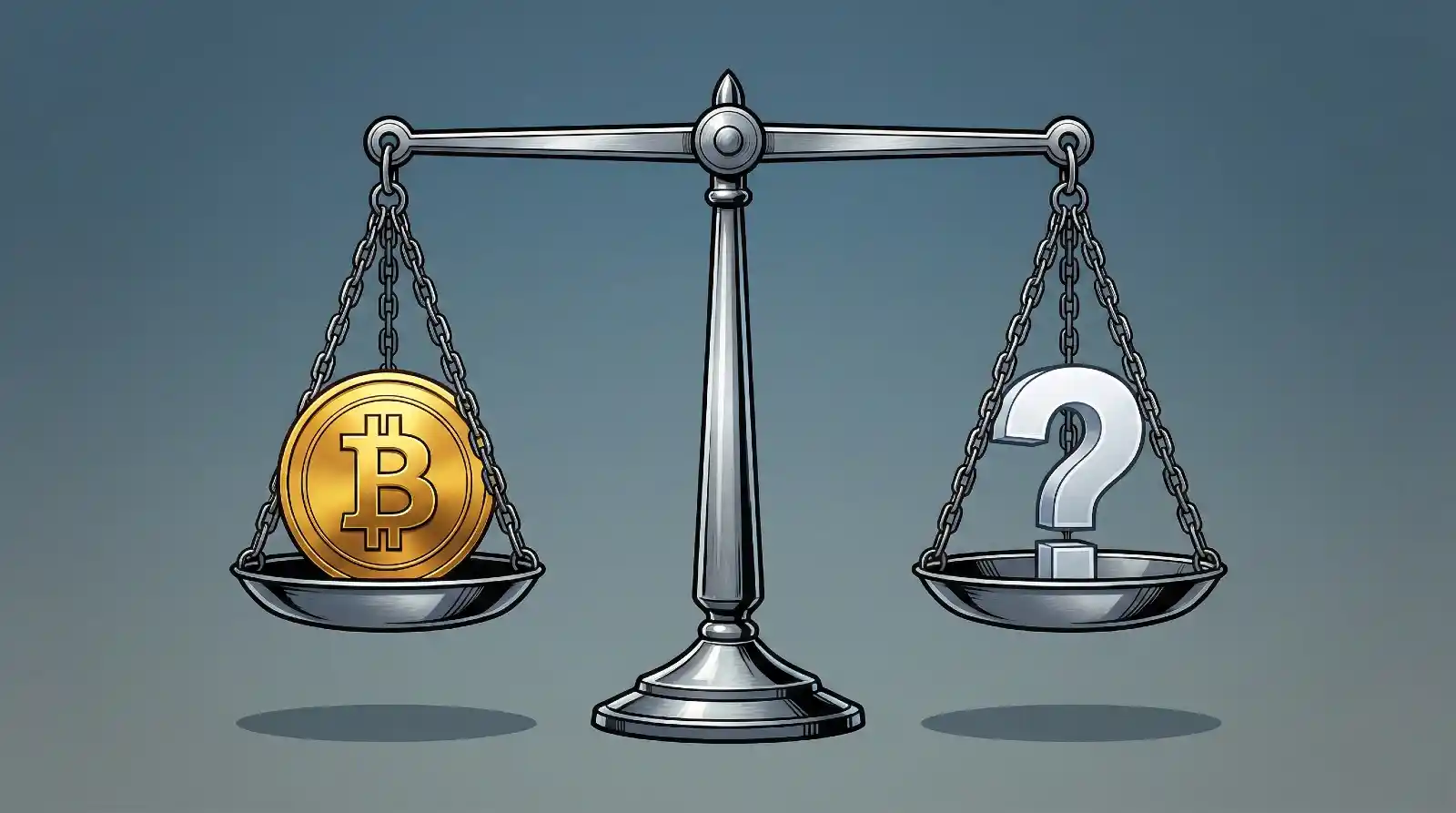
“Should I buy Bitcoin now?” and “is now a good time to buy Bitcoin?” are among the most searched questions in cryptocurrency. It is also one of the most difficult to answer because the right choice depends entirely on your personal circumstances, financial goals, and risk tolerance.
This article does not tell you whether to buy or not buy Bitcoin. Instead, it provides a framework for thinking through the decision yourself. We present the arguments that some investors use to justify buying, the arguments others use to justify waiting, and the questions you should ask yourself before putting any money into cryptocurrency.
Current Market Context
As of December 2025, Bitcoin trades in the $90,000 to $93,000 range, according to CoinGecko. This follows a volatile year that saw BTC reach an all-time high of approximately $126,000 in October 2025 before pulling back significantly.
The current market sits in a post-halving environment. The April 2024 halving reduced Bitcoin’s block reward from 6.25 to 3.125 BTC, cutting the rate of new supply in half. Historically, halving events have preceded periods of price appreciation, though this pattern is not guaranteed to repeat.
Institutional involvement has grown substantially, with U.S. spot Bitcoin ETFs (approved in January 2024) attracting significant capital inflows. The U.S. government has also established a Strategic Bitcoin Reserve through executive order, signaling increased mainstream acceptance of Bitcoin as an asset class.
However, market conditions change rapidly. By the time you read this, prices and circumstances may be different.
Arguments Some Investors Use FOR Buying Bitcoin
The following points represent reasons that some investors cite when deciding to purchase Bitcoin. These are not recommendations but rather perspectives that exist in the market.
Long-Term Adoption Trends
Bitcoin adoption continues to grow globally. Institutional investors, corporations, and even governments have added Bitcoin to their balance sheets or reserves. Some investors view this increasing adoption as a signal that Bitcoin is transitioning from a speculative asset to a more established store of value.
Scarcity by Design
Bitcoin’s protocol limits the total supply to 21 million coins. With approximately 19.95 million BTC already mined (per Blockchain.com data), and an estimated 3 to 4 million permanently lost according to Chainalysis research, the effective supply is even more limited. Some investors find this programmed scarcity attractive compared to fiat currencies, which can be printed without limit.
Historical Halving Patterns
Historically, Bitcoin has experienced significant price appreciation in the 12 to 18 months following halving events. With the most recent halving occurring in April 2024, some investors believe the current period may offer favorable entry points. However, historical patterns do not guarantee future results, and each market cycle is different.
Portfolio Diversification
Some financial advisors suggest that a small allocation to Bitcoin (often cited as 1% to 5% of a portfolio) may provide diversification benefits due to Bitcoin’s historically low correlation with traditional assets. This perspective treats Bitcoin as one component of a broader investment strategy rather than a standalone investment.
Arguments Some Investors Use AGAINST Buying Bitcoin
The following points represent reasons that some investors cite when deciding to wait or avoid purchasing Bitcoin. These concerns are equally valid and deserve serious consideration.
Volatility Risk
Bitcoin has experienced crashes of 80% or more on four separate occasions throughout its history. According to historical CoinGecko data, these include a 93% decline in 2011, an 86% decline in 2014 to 2015 following the Mt. Gox collapse, an 84% decline in 2017 to 2018, and a 77% decline from November 2021 through 2022, culminating with the FTX collapse.
While Bitcoin has recovered from each of these crashes to reach new highs, the recovery periods lasted months or years. Investors who needed their capital during these downturns faced significant losses.
Regulatory Uncertainty
Cryptocurrency regulation varies widely across jurisdictions and continues to evolve. Potential regulatory changes could impact Bitcoin’s price, utility, or legality in certain regions. Some investors prefer to wait for greater regulatory clarity before committing capital.
Opportunity Cost
Capital invested in Bitcoin cannot be invested elsewhere. Some investors weigh Bitcoin against alternatives such as stocks, bonds, real estate, or simply keeping cash available for emergencies. The opportunity cost of any investment deserves consideration.
Current Valuation Questions
After significant price appreciation from its early years, some investors question whether Bitcoin’s current valuation offers attractive risk-adjusted returns. This perspective suggests waiting for lower prices or considering smaller position sizes.
No Cash Flow
Unlike dividend-paying stocks or interest-bearing bonds, Bitcoin generates no income. Its value depends entirely on future buyers willing to pay more than the current price. Some investors prefer assets that produce cash flow.
Questions to Ask Yourself Before Buying
Rather than asking “should I buy Bitcoin now” or “should I invest in Bitcoin,” consider asking yourself these questions:
What is your time horizon?
Bitcoin’s volatility makes short-term price movements unpredictable. Most long-term holders have fared better than those who attempted to time the market. Are you prepared to hold through potential 50% to 80% drawdowns that may last years?
Can you afford to lose this money entirely?
Despite Bitcoin’s track record, no investment is guaranteed. Would losing your entire Bitcoin investment significantly impact your financial security or lifestyle? If yes, the position size may be too large.
Do you understand what you’re buying?
Before investing in any asset, you should understand its fundamentals. Do you understand how Bitcoin works, why it has value to some people, and what risks are involved? Our Bitcoin explainer covers the basics.
Is your financial house in order?
Financial advisors typically recommend addressing high-interest debt, building an emergency fund, and contributing to retirement accounts before investing in speculative assets. Have you covered these basics first?
Have you consulted a qualified professional?
A certified financial planner or advisor can help you understand how Bitcoin might (or might not) fit into your overall financial plan based on your specific circumstances.
Approaches People Use When Buying Bitcoin
For those who decide to purchase Bitcoin, two common approaches exist. Neither is necessarily better; they simply reflect different philosophies.
Lump Sum
Investing a set amount all at once. Proponents argue this approach maximizes time in the market. Critics note it increases exposure to short-term volatility and the risk of buying at a local peak.
Dollar-Cost Averaging (DCA)
Investing smaller amounts at regular intervals (weekly, monthly, etc.). Proponents argue this approach reduces the impact of volatility and removes the pressure of timing decisions. Critics note it may result in a higher average cost if prices rise steadily.
Our guide on how to buy and sell Bitcoin covers the practical steps for either approach.
Common Mistakes to Avoid
Regardless of whether you decide to buy, these mistakes have hurt many cryptocurrency investors:
FOMO Buying at Peaks
Fear of missing out often leads investors to buy after significant price increases, only to see prices decline. The best time to buy is rarely when everyone is talking about how much money they’ve made.
Investing More Than You Can Afford to Lose
Given Bitcoin’s volatility, investing money you may need for near-term expenses or emergencies creates significant risk. Forced selling during a downturn locks in losses.
Poor Security Practices
Investors have lost Bitcoin to exchange hacks, phishing attacks, and lost passwords. Understanding proper security practices is essential before holding significant value in cryptocurrency.
Panic Selling During Downturns
Selling during crashes has cost more investors money than the crashes themselves. Those who panic sold during previous 80% drawdowns missed subsequent recoveries to new all-time highs.
Ignoring Tax Implications
In many jurisdictions, cryptocurrency transactions trigger taxable events. Consult a tax professional to understand your obligations before buying or selling.
Conclusion
The question “should I buy Bitcoin now?”, or whether to buy Bitcoin or wait, has no universal answer. The right decision depends on your financial situation, goals, risk tolerance, and time horizon.
This article has presented:
- Current market context as of December 2025
- Arguments some investors use for buying Bitcoin
- Arguments some investors use against buying (or for waiting)
- Questions to help you evaluate your own situation
- Common approaches and mistakes
The decision is yours to make. If you are uncertain, consulting a qualified financial advisor who understands both your personal finances and cryptocurrency is a prudent step before investing any money.
Final Disclaimer: This article is for informational purposes only and does not constitute financial, investment, or trading advice. Cryptocurrency investments carry significant risk, including the potential loss of your entire investment. Always conduct your own research and consult a qualified financial advisor before making investment decisions. Past performance does not guarantee future results.
Change Log
- Dec 14, 2025 – Minor writing update
- Dec. 13, 2025 – Originally Published
Sources
- CoinGecko. (2025). Bitcoin Price Data. https://www.coingecko.com/
- Blockchain.com. (2025). Total Circulating Bitcoin. https://www.blockchain.com/charts/total-bitcoins
- Chainalysis. (2017-2025). Lost Bitcoin Analysis. https://www.chainalysis.com/
- White House. (2025, March 6). Fact Sheet: President Donald J. Trump Establishes the Strategic Bitcoin Reserve and U.S. Digital Asset Stockpile. https://www.whitehouse.gov/fact-sheets/2025/03/
- Bitcoin Whitepaper. (2008). Bitcoin: A Peer-to-Peer Electronic Cash System. https://bitcoin.org/bitcoin.pdf
